

About PI4KA
PI4KA-related disorder usually becomes apparent in babies or young children. Affected individuals experience symptoms in three main areas.
 Neurological signs and intellectual disability
Problems with brain development and function, leading to changes in the way an individual develops and moves.
- The most common neurological symptom is stiffness in the legs, known as ‘spasticity’, which results in delayed physical milestones such as sitting, standing, and walking. The stiffness may also affect the arms, impairing more precise physical skills such as the ability to handle small objects. This stiffness typically worsens over time and may be accompanied by co-ordination problems. From the information currently available, it is estimated that around 50% of individuals will be able to walk, often supported by a walker or other aids. It its most severe form, PI4KA-related disorder can cause severe stiffness which affects babies in the womb and causes some joints to become fixed. This is called arthrogryposis and has been reported in three babies from one family to date.
- Speech is often delayed, but the severity of this delay is extremely variable. Some children may not develop any speech, whilst others are able to communicate in short sentences.
- Intellectual disability is seen in nearly all affected individuals, but the severity of this is also variable. Of the 15 patients currently reported in the scientific literature three had mild intellectual disability, five moderate and seven severe.
- Seizures may present as a full body seizure, with stiffening or jerking of the arms and legs (tonic or myoclonic seizures), or as more subtle seizures such as recurrent brief ‘daydreaming’ spells (absence seizures). A more severe type of seizure affecting young children called infantile spasm is also seen. Some of the seizures reported in PI4KA-related disorder have responded well to treatment, whilst others have been more difficult to manage.
- An individual may have problems with eyesight, including a condition called nystagmus where the eyes appear to wobble.
- Other neurological: A smaller proportion of patients experience swallowing difficulties (dysphagia), abnormal movements or muscle spasms (dystonia) and a tremor.
 Gastrointestinal
Problems with the gut/bowel and digestion.
- A proportion of affected individuals have developed gut symptoms, including tummy/abdominal pain and diarrhoea. Some of these patients have undergone investigations for this and have been found to have inflammation of the gut, called inflammatory bowel disease (conditions called Crohns disease and ulcerative colitis have both been seen).
- One group of patients, originating from the Amish community in the USA, presented with a severe bowel condition called multiple intestinal atresia. In this condition, the normal tube-like structure of the bowel is replaced by a rope-like structure without a central ‘pipe’ for food and nutrients to pass through.
 Immune
Problems with frequent and severe infections.
- A number of individuals with PI4KA-related disorder experience problems with their immune system, called a combined variable immunodeficiency. This results in an increased susceptibility to common infections like coughs, colds or chicken pox, and in more severe symptoms from these infections. A full understanding of the types and extent of immune problems seen with this disorder is currently not well understood.
Other
In a small number of individuals with PI4KA-related disorder additional features may be present.
- Abnormalities of the kidneys or genitals
- Hearing loss
- Childhood arthritis
- Mild differences in facial features when compared to other family members (facial dysmorphism)
It is not currently fully understood why one individual may only experience one or two symptoms from only one area, while others experience multiple symptoms from all three areas.
PI4KA-related disorder is caused by changes (called variants) in the DNA sequence of a gene called ‘PI4KA’. A gene can be thought of as an instruction that tells the body how to develop, grow and function correctly. We all have thousands of genes in every cell of our body, with each having a specific role. For example, some genes tell the body how to form the complex structure of our brain, whilst others are involved in maintaining our gut and digestive system.
A gene is made up of building blocks called ‘nucleotides’, which are a specific and precise string of letters that make up the instruction. These instructions tell our cells how to create proteins, which have many different functions in our cells. If the letters (nucleotides) in a gene are changed, it may change the meaning of that instruction and result in an abnormal or absent protein. This can affect the way a cell works, leading to abnormal development or function of specific parts of the body.
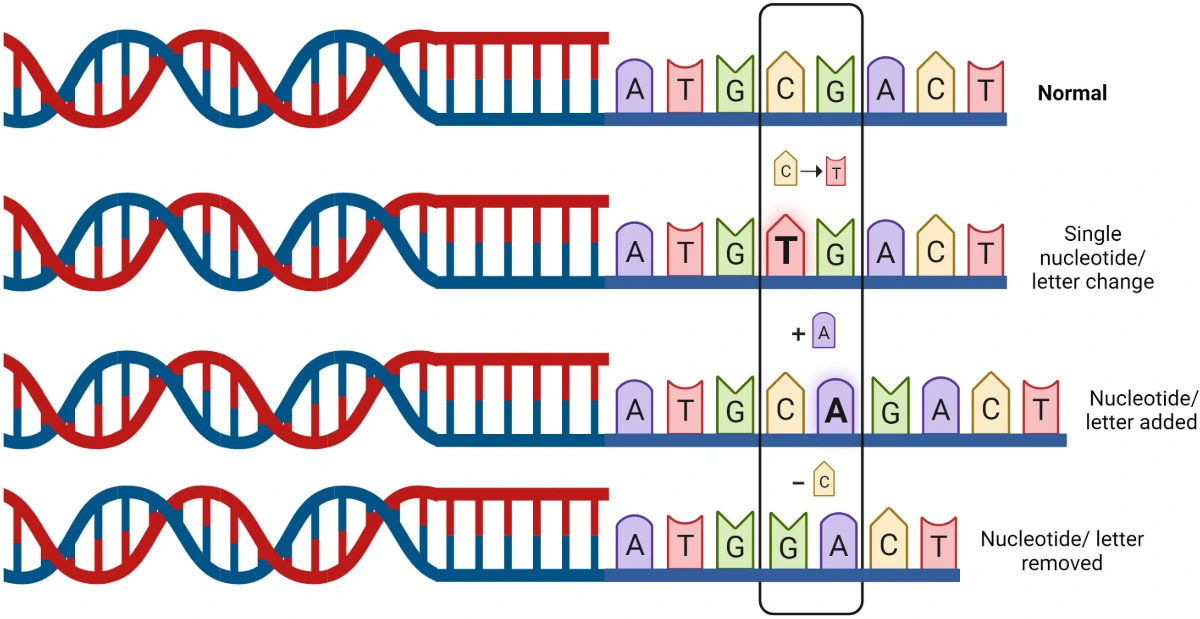
This image shows examples of how the DNA sequence can be altered by changing, adding or removing a nucleotide/letter.
These changes can have a variable impact on how the gene’s protein is formed and therefore how it functions in the body.
(Created in BioRender)
Many different changes in the sequence of the PI4KA gene have now been shown to cause PI4KA-related disorder. We are currently working to understand how different sequence changes may link to the variety and patterns of symptoms seen in individuals with this condition. In the Amish community in the USA, we identified a particular sequence change which is associated with a severe bowel condition termed ‘multiple intestinal atresia’ (see ‘Research’ section for further details).
As PI4KA-related disorder is caused by a change in the sequence (called a variant) of the PI4KA gene, it may be passed from one generation to another in a family. In each of our cells we have two copies of every gene, as we inherit one copy from our mother and one from our father. Individuals with PI4KA-related disorder have a variant in both copies of their PI4KA gene. This is called autosomal recessive inheritance. Having one normal copy of the PI4KA gene and one with a variant is not known to cause any medical problems. This is called being a ‘carrier’ of a genetic condition and is often found in parents of a child with an autosomal recessive condition like PI4KA-related disorder. The chance of another child from these parents being affected with PI4KA-related disorder is 25%.
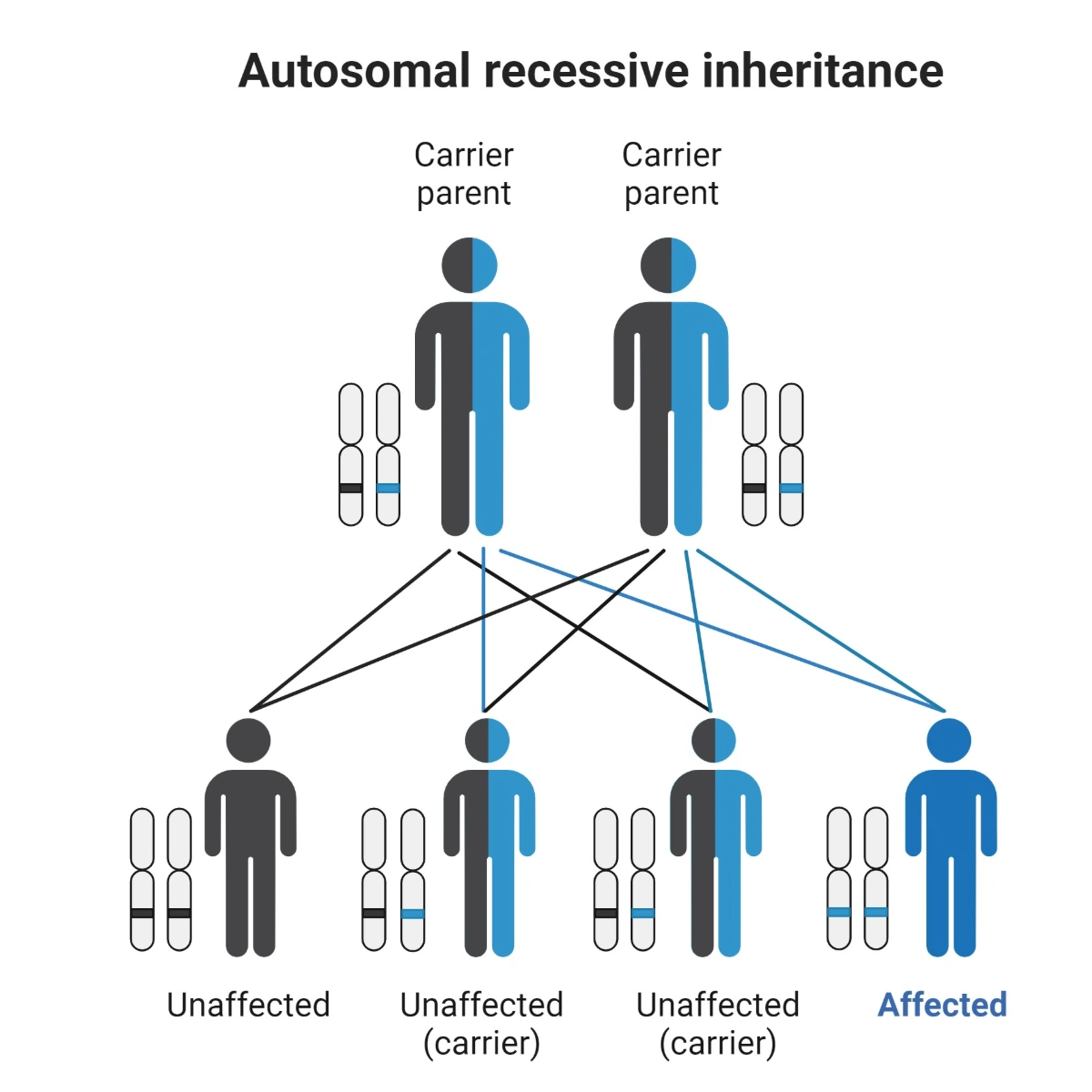
Image showing autosomal recessive inheritance when both parents are carriers of a specific genetic variant.
The chance of each outcome is 25% (or 1 in 4).
(Created in BioRender)
PI4KA-related disorder is diagnosed following a combination of clinical review and genetic testing.
Clinical review is likely to primarily involve your child’s paediatrician, followed by more specialist input if problems are found. This will include a clinical geneticist to lead the genetic testing (below), with or without input from neurologists, gastroenterologists, immunologists, ophthalmologists, and audiology.
Genetic testing is usually performed on a blood sample from the affected child and their parents (when available). These parental samples help the scientists to interpret the test result. Sometimes, a saliva sample can be used as an alternative to blood. There are two main types of genetic test available:
- Targeted genetic testing (gene panel): In this type of genetic test, your doctor will use their findings from the consultation (both your/ your child’s described symptoms and the clinical examination findings) to look for spelling mistakes in a predefined number of genes that are already linked to genetic conditions known to cause similar medical problems.
- Untargeted genetic testing (whole genome or whole exome sequencing): This type of genetic test looks at the spelling of all the genes in the body and aims to identify any spelling mistakes which may detrimentally affect the formation or function of our body.
Historically, targeted genetic testing was quicker and cheaper than untargeted genetic testing, however, as technology advances these differences are become less marked. Results from both types of tests may still take a number of weeks or months to come back. This is largely due to the complexity of interpreting the large amount of information produced by these tests.
The genetic test result will describe any spelling mistakes or variants in the genetic code which the scientists predict will have a detrimental effect on the function of the PI4KA protein produced by the PI4KA gene, and therefore may result in physical symptoms of PI4KA-related disorder in that individual. If the specific spelling change has been previously described in relation to PI4KA-related disorder or is predicted to stop the protein working entirely, then it is termed a ‘pathogenic variant’. If the specific spelling mistake has not been previously reported but, using multiple lines of evidence, is extremely likely to disrupt the function of the PI4KA protein and result in PI4KA-related disorder then it is termed a ‘likely pathogenic variant’. Any spelling mistakes which are not thought to disrupt the protein are called ‘benign’ or ‘likely benign’ as they are not likely to cause any medical problems. Sometimes a spelling mistake may be classified as a ‘variant of uncertain significance’. This occurs when there is currently insufficient data to confidently predict whether the spelling change could be linked to any medical issues.
A child with PI4KA-related disorder will likely require personalized care from a multidisciplinary team. This team often comprises physiotherapists, occupational therapists, speech and language therapists (communication and swallowing problems) and a variable number of medical doctors depending on each child’s specific difficulties. This might include:
- Neurology for management of limb spasticity, motor issues and seizures with medications and mobility aids
- Gastroenterology and gastrointestinal surgeons for management of abdominal issues including multiple intestinal atresia and/or inflammatory bowel disease, and consideration for gastrostomy insertion if required
- Immunology for monitoring and treatment of immunodeficiency or infection susceptibility
- Paediatrics to oversee a child’s medical management, including growth and development
- Ophthalmology for management of any visual problems as per standard protocols (e.g. glasses, patching etc.)
- Audiology to monitor for any hearing loss and provide aids if required
Children with this disorder are likely to be reviewed at least yearly to closely monitor their symptoms, growth and development, and to provide timely and targeted treatments where possible.
PI4KA-related disorder is inherited in an autosomal recessive manner, which means that both parents are usually carriers of the disorder. If a disease-causing variant in the PI4KA gene has been identified in a family; then genetic counselling, carrier testing and prenatal/preimplantation genetic testing is possible to support further family planning.

